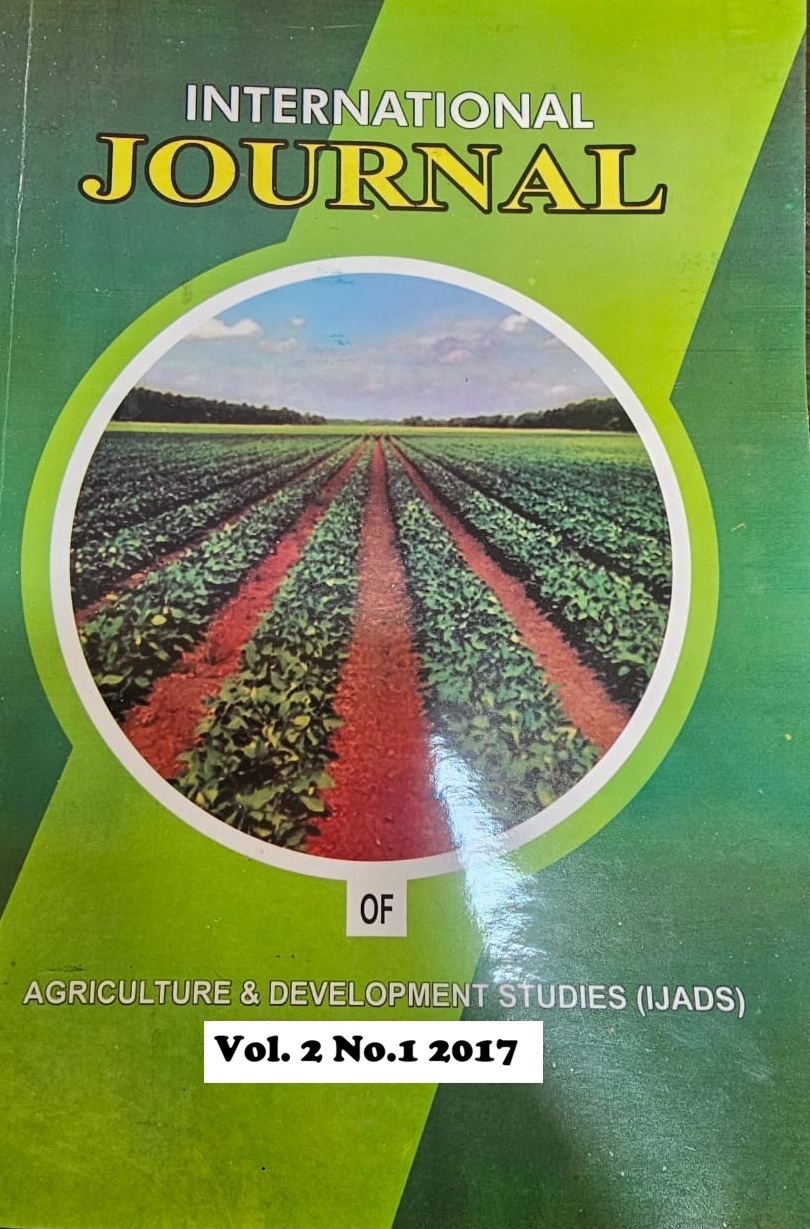
FACTORS AFFECTING THE ADOPTION OF REDUCED TILLAGE PRACTICES BY MAIZE FARMERS IN KAGARKO LOCAL GOVERNMENT AREA OF KADUNA STATE
DOI:
https://doi.org/10.68292/53kw9550Keywords:
Adoption, reduced tillage practices, farmersAbstract
The study examines factors affecting the adoption of reduced tillage practices among maize farmers in Kagarko Local Government Area of Kaduna State. Data were gathered through the administration of questionnaire to ninety (90) maize farmers who were randomly selected from three villages. Multiple regression and costs and returns analyses, percentages, frequency counts were used to analyse the data collected for the study. The results of the costs and returns analysis showed that N18,737 was incurred with a gross revenue of N 128,750 per hectare. The result further reveals that a profit of N 110,013 and benefit cost ratio of 6.87 per hectare with N 5.87k net return on investment were realized in a month. The result of the regression analysis reveals that education, marital status, farm inputs cost and farming experience exert significance effect on maize output in the area. The findings from the study showed that reduced tillage practices is profitable (N110,013) and significantly influenced by farmers education, marital status, farm inputs cost years of farming experience. The study therefore recommended adult literacy through the use extension approaches such as farmers’ field school and village adoption practice to enhance farmers’ skill and knowledge.