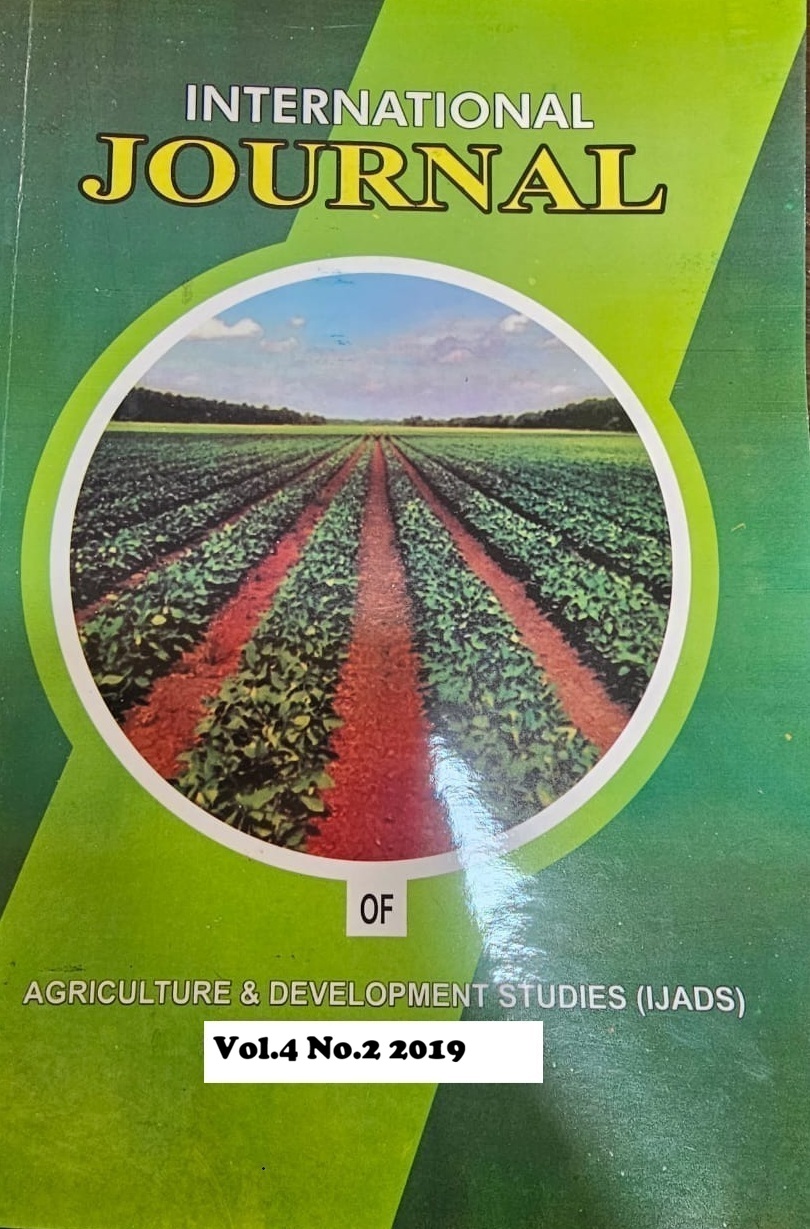
Socio-Economic Determinants of Adoption of Improved Cowpea Varieties in Northern Nigeria
DOI:
https://doi.org/10.68292/9n45zx94Abstract
Studies have been conducted on the factors influencing the adoption of cowpea in different locations in Nigeria. This study is specifically conducted to identify socio-economic factors influencing the adoption of improved cowpea varieties in some selected states of Northern Nigeria under the Community-Based Agriculture and Rural Development project. A four-stage sampling technique was employed to select farmers. In the first stage, five states with the highest poverty index were purposively selected in Northern Nigeria. Secondly, all the communities in each State were stratified into two groups; participating and non-participating communities. Using simple random sampling technique, 7 communities were selected in each group per State, and 5 farmers from each community. Primary data were collected from 144 respondents using structured questionnaire. The analytical techniques used were descriptive and inferential statistics. Determinants of adoption were identified using Logit regression model. The results showed that the most preferred cowpea variety in the study area was IT90K-277-2. The outstanding attribute indicated by most respondents was high yield. Factors influencing adoption decisions among the respondents include access to extension services (β = 3.02, p ≤ 0.01), membership of farmers‟ association (β = 1.04, p ≤ 0.10), livestock asset owned (β = 1.89 E-06, p ≤ 0.05) and farmers‟ access to credit facilities (β = 1.63, p ≤ 0.01). These socio-economic factors were significantly different between adopters and non-adopters. The study concluded that improved varieties deployed to farmers were adopted across the five project implementing States. Keywords: Adoption, arable crops, improved varieties, logit, influence.